Showing posts with label Exercises/Tips. Show all posts

Wednesday, September 07, 2011

Successful Aging


It's pretty hard to defy gravity if your body and mind are going down hill, so here's a quick overview of what I've learned over the past decade about successful aging:

  • In 10 years, 1 out of 5 people will be over 65. 
  • The stereotype of old people as hard of hearing and stooped over with a cane is just that—a stereotype.
  • Being old is not the same as being sick.  
  • What is normal in old age is much more variable than what is normal at, say, 30.
  • At any age, it’s normal to have some trouble with memory.  It's all a matter of degree.
  • Successful aging is not largely dependant on genes.  Our habits are more important than our DNA.
  • The most important thing we can do to help our memory, cognition, mood and sleep is to exercise at least a 1/2 hour every day.  Vacuuming, gardening, walking—all count as exercise.

Wednesday, August 31, 2011

Keeping Alzheimer's at Bay


Today’s post was written and sent to me by Allison Gamble:

Keeping Alzheimer’s at Bay

As we get older, many of us ask ourselves:  Will my hearing diminish?  Will I need bifocals?  Will my hips and knees hold out?  And scariest of all:  Will my mind stay sharp?

Interestingly, the authors of a recent study published by the American Academy of Neurology discovered that symptoms of Alzheimer’s are less noticeable in people over 80 than in the 60-75 age range.  At any age, however, the fact remains that Alzheimer’s is a devastating disease that can quickly short circuit our dreams.

The good news is that we can take preventative steps now to reduce our chances of losing cognitive function later. Though there’s no definitive lifestyle that can prevent Alzheimer’s, numerous studies have demonstrated that getting regular exercise, plenty of omega-3 fatty acids and lots of mental stimulation can help keep the disease at bay.

Wednesday, July 27, 2011

Use It Or Lose It

Show me a group of healthy and vibrant “super seniors,” and I’ll show you a group of people who regularly  exercise.  Like Art White, the ninety-nine year old I recently interviewed for my TV show, these individuals might not use the “e” word to describe what they do to keep moving, but move they do.  Yoga master Tao Porchon-Lynch (see below) is a perfect example of this and an inspiration to anyone who needs a little push to get off the couch.


Wednesday, July 20, 2011

The Force of Habit

Even though personality stabilizes by 20 and is virtually solidified by 50, this doesn't mean that all opportunity for growth stops in midlife. No matter what your age, it's still possible to change some of those habits that are holding you back from fulfilling your dreams.

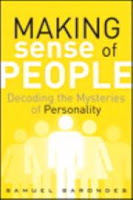
In a new book titled Making Sense of People:  Decoding the Mysteries of Personality, leading neuroscientist Samuel Barondes cites the example of Benjamin Franklin

From his early twenties until he died at 85, Franklin worked to "guard...against the unremitting attraction of ancient habits and the force of perpetual temptations."

Wednesday, June 22, 2011

Questions for a 99-Year Old

This past Monday I had a remarkable guest on my TV show.  His name is Art White, and he's turning 99 this coming Friday.  Somehow Art has managed to outlive the vast majority of his peers and stay astonishingly active.  Since retiring at age 95 from his third career, he still bowls twice a week, does Tai Chi once a week, plays bridge four times a week, eats anything he wants and takes no pills--not even vitamins.  He's aiming to be 110.

To prepare for the interview, I went on Facebook and asked my "friends" to post questions for Art.  I heard from people all over the U.S.  I even got a reply from a woman in London, England.  Most of the respondents are middle-aged, but one is in her twenties and two are in their seventies.

Next week I'll relay some of Art's answers, but first I thought it would be interesting to pass along the questions and give you a chance to answer them yourself.  If you keep a journal, you might consider addressing one a day.  Why wait until you're 99?

Wednesday, May 11, 2011

The Elevator Speech


Madison Avenue types know that an elevator speech—a snappy description of a product or service presented in the time span of an elevator ride— can help seal the deal if you’re pitching something.  But did you know that crafting an elevator speech can also help you clarify your goals?

Being able to quickly and succinctly sum up what you’re doing in a way that excites others can be a fundamental step on the road to achieving your dreams.  To begin, you only need three essential elements:

Wednesday, May 04, 2011

The Guilt Trap


I guilt easily.  Or at least I used to.  Like many women, I reproached myself for not being the mother, daughter, friend, teacher, writer, and coworker I thought I should be.  I’d beat myself up for exercising too little and snacking too much, for being too organized—yup, I’m serious—and not productive enough.  Oh and I even felt guilty about genocide and world hunger, things over which I obviously have no control.

When I say "like many women," what I really mean is most.  A recent survey by Stylist magazine found that more than 96 percent of us feel guilty at least once a day.  As Erica Jong once famously said: “Show me a woman who doesn’t feel guilty and I’ll show you a man.”

Some of this can be attributed to wiring.  According to researchers, women are generally more empathic than men.  But some of this also comes down to women’s generalized lack of self-worth, reinforced over the millennia by cultural and religious tenets.  We’ve been taught from an early age to be “good” and that being good means putting others first.  When we don’t, we quickly feel bad.

Whatever the cause of my guilt, I realized somewhere along the line that I was wasting a lot of precious energy on it, energy that once freed up, could be used in more fruitful ways.  I also realized that if I didn’t value myself, others wouldn’t either.

So how did I get out of the guilt trap?  Believe me, it’s on ongoing process, but basically…

Wednesday, April 20, 2011

No-List Saturdays


These days who doesn’t have a zillion things to do?

The way I cope is by making lists.  Each morning I think about the day ahead, decide what I want to accomplish, and jot down on a piece of paper my game plan.  The upside is that I get things done.  I send in my taxes early.  I always usually return from the grocery store with all the supplies I need.  I eventually even finish writing books.

The downside is that sometimes I get so caught up in ticking items off my list that my life devolves into an endless loop of tasks.  Like the mythical Sisyphus, I no sooner complete one round of to-dos than I start another.  (Sometimes I think that the ancient Greeks understood more about the human condition than we do.)

Wednesday, March 30, 2011

The Big Shift

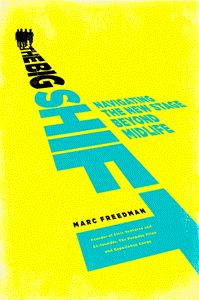
If you’re a boomer contemplating a life change, Marc Freedman’s newest book The Big Shift:  Navigating the New Stage Beyond Midlife is a must-read.  Not only is the writing unusually clear and compelling for this genre but Freedman presents a provocative idea.  As the press release I received with my review copy states:
Freedman's book is an impassioned call for breaking free from old habits like clinging to lost youth ("60 is the new 40"), or prematurely aging people long before their time (senior discounts at 50 or 60).  It's time to accept the decades opening up between midlife and anything approximating old age for what they really are, Freedman says--an entirely new stage of life.
A boomer himself and the father of two toddlers (yes, you read that right), Freedman isn't just spewing hot air.  As the founder of Civic Ventures, cofounder of both The Purpose Prize and Experience Corps, and author of several other books including Encore:  Finding Work That Matters in the Second Half of Life, Freedman is a towering expert in the field of midlife transition.  The New York Times calls him "the voice [emphasis mine]of aging baby boomers who are eschewing retirement for meaningful and sustaining work later in life.”  

This book shows why Freedman deserves this kind of praise.

Wednesday, March 23, 2011

The Hero Within


In light of recent events in the Persian Gulf and Japan, I want to mention once again how important it is to make a habit of being courageous. 

(I’m saying this as much for myself as I am for anyone else.)

Who, in other words, doesn’t long to speak out against injustice? And if, heaven forbid, a flood rises around our house or a building crashes at our feet, who wouldn’t prefer to be the one who reaches out and lends a hand rather than the one who ignores others’ pleas and saves only herself?

But just as our "bold muscles" need to be exercised in order to attain our dreams, so too do we have to continually practice doing the right thing when the stakes are small if we are to have any chance of doing it when lives are on the line.

Which reminds me of one of my favorite quotes:
If only it were all so simple! If only there were evil people somewhere insidiously committing evil deeds, and it were necessary only to separate them from the rest of us and destroy them. But the line dividing good and evil cuts through the heart of every human being. And who is willing to destroy a piece of his own heart?   ~Alexander Solzhenitsyn
Photo Credit:   Reuters/Aly Song  

Wednesday, March 16, 2011

Healthy Aging: As Old As We Feel

Today's post was contributed by Mary Albert, a blogger for happyhealth.net, which is an innovative senior lifestyle/health portal targeting baby boomers and their parents.  The site contains four pillars to lifestyle happiness as well as a section reviewing and rating medical alert systems.  But before reading Mary's post, here's a 1 min. 37 sec. video I shot in my office yesterday on the subject of healthy aging.  I'm in the process of learning how to use iMovie and, frankly, just wanted to practice. 


And now, here's Mary's post:
When it comes to retirement, there are a lot of ways that people choose to spend their time. Since I've been doing training and exercise my entire life, I naturally tend to focus more on the fun aspect of retirement: playing sports, getting involved in recreational events, and doing anything that involves being physically and socially active. After all, this is the encore to your working life. It is your time to get out there and have fun to make up for all the work that you've done. Why not have that fun by playing sports or joining a team or club in the community?

Wednesday, February 23, 2011

What do you know for sure?

Several years ago film critic Gene Siskel asked Oprah a simple question: "What do you know for sure?"  Caught off guard, the talk-show queen said she needed to go home and think about it--or so she claims in an O magazine subscription offer I recently received.

At first I was going to toss the flier in the trash.  I don’t need any more magazine subscriptions, thank you.  But the question grabbed me.  On the verge of getting lost in a philosophical rumination on the nature of space-time, I stopped and skimmed Oprah's answer.  My list isn't the same as hers (all I can say for certain is that I'm breathing and that I believe in the transformative power of love), but her top ten are worth a look:

Wednesday, February 02, 2011

A Profile in Courage


Some people are born daredevils, risking life and limb without breaking into a sweat.  Others are born chickens, plagued by so much self-doubt that even when they desperately long to to take a leap in their lives, they can't.

And then there are those who are just as afraid as the non-leapers, yet jump anyway.  George VI of Britain, nicknamed “Bertie” by his family and played to perfection by Colin Firth in The King’s Speech, was just such an individual--or so the film would have us believe.

Trying to overcome a debilitating stammer as he ascends to the throne, the future king struggles mightily, but doesn't give up.  When speech therapist Lionel Logue (Geoffrey Rush) says to him, "Bertie, you're the bravest man I know," the audience understands exactly what he means.

How can the rest of us cultivate this kind of courage?  The film provides a roadmap:

Monday, November 30, 2009

Curt Rosengren


Looking to find a purpose? Want more passion in your work life? Here’s one of the best blogs I’ve came across so far on this topic: The M.A.P. Maker: Meaning, Abundance & Passion in Your Career and in Your Life.

The brainchild behind this site is self-described "Passion Catalyst” Curt Rosengren, author of The Occupational Adventure Guide: A Travel Guide to the Career of Your Dreams and 101 Ways to Get Wild About Work.

Rosengren, who’s frequently quoted in national newspapers (I heard about him in USA Today) and whose first blog, The Occupational Adventure, was chosen by Forbes.com as one of the Best of the Web, has built a career around asking three simple questions:

1. What lights you up?
2. What difference do you feel compelled to make in the world?
3. How do you create a livelihood based on that?

Wednesday, April 01, 2009

Sticking With Your Dreams

Research shows that 80 percent of people who resolve in January to change their behavior have lost heart by Valentine’s Day. By Easter--well, forget it.

According to clinical psychologist Dr. Marion Jacobs, author of Take-Charge Living: How to Recast Your Role in Life...One Scene at a Time, part of the problem is that our brains don’t believe we’re serious about changing until they see some proof.

So whether you have a resolution you haven’t kept or a dream you haven’t stuck with, consider the following strategies to give your brain the evidence it needs:

Set small, achievable goals. Perhaps you’ve been wanting to go back to school and earn a degree but keep coming up with excuses. Set a goal of signing up for a single class or one-day workshop. If you enjoy it, chances are you’ll take another. If you don’t, at least you’ll have learned something about yourself. The same strategy applies to all sorts of endeavors. Want to write a memoir, but can't get started? Write a page a day and you'll have 365 by the end of the year.

Thursday, January 29, 2009

The Art of Giving

Here we are in the middle of a recession and I'm re-doing my bathrooms.

Believe me, I'm not the kind of person who enjoys renovating houses. (I'm one of those rare women who hates to shop.) I've kept up with maintenance, but haven't had any major work done around here in 14 years. The last time I think the bathrooms were done was in '78.

So why spend money now?

Because I had a bit of cash on hand and thought, what the heck, why not put some people to work?

(My decision was helped along by the fact that my Formica-clad counters were falling apart, but really they've been falling apart for years.)

I know it's counterintuitive, but I've found that there's no better way to cope with feeling depleted than to dig deeper into my heart, deeper into my pockets, deeper into whatever hole I find myself in and give more than I think I have left to give.

I'm not talking about going into debt. I'm talking about spending some of my reserves. By investing in others--by investing in hope--I instantly maximize my return. Not of money, of course. (Who knows if I'll ever recoup the cash I've put into this project.) But of joy.

Tuesday, January 13, 2009

No Job? No Prob!


Nicholas Nigro, author of a cheery, new advice book (perhaps too cheery?) titled No Job? No Prob!: How to Pay Your Bills, Feed Your Mind, and Have a Blast When You’re Out of Work (Skyhorse Publishing 2008), offers the following tips for those who suddenly find themselves with time on their hands:
  1. Start the day as early as possible--our brains, Nigro argues, tend to be more focused in the morning than in the evening
  2. Keep your learning curve perpetually greased--taking classes—either online or in person—might benefit your job search or inspire a future career

Wednesday, December 03, 2008

Acting As If, Cont.

In response to my last posting, a woman named Liz e-mailed me yesterday to share the following story:
When I was a recent grad of Boston University’s art history department in 1982, there were hundreds of lovely young “art historians” roaming the cultured city of Boston looking for the same gallery job that I was. After 9 months of searching ( being charming was so exhausting), I landed a job in a small gallery where the director was inadequate and the owner had just met the love of her life and was about to become an absentee owner. After only one month of being the gallery assistant she asked me to become her gallery director. There were 50 visual artists in her “stable” and she had a plan to transform the focus from visual arts to high-end, artist-made metalsmithing (read: jewelry). I was simultaneously thrilled and panicked by her offer and vision of me as her gallery director.

She taught me EXACTLY what you suggested in your blog today. I consider her my mentor in many ways because she implored me to act “AS IF” I was in charge. She was a phone call away for consult and guidance and assured me that I had the instinct (if not the experience) TO BE her gallery director. While all of my clients and artists (customers and vendors) were older than I was, I quickly assumed the title and persona of the Director.

Of course, acting “AS IF” is easier when there is support around to guide us through unknown waters. But the self navigation can be even more satisfying. I benefited from both.

Monday, December 01, 2008

Exercise of the Week: Acting As If

Telling someone to fake a feeling sounds slightly disreputable. But as many a famous author, movie mogul or businesswoman will tell you, sometimes to get ahead you've got to pretend you've got more on the ball than you actually do.

When Defying Gravity was no more than a pipe dream, I walked and talked as if I were already a "real" writer. Before I ever put pen to paper, I called up prospective interviewees and said, "I'm writing a book about late bloomers and was wondering if I could take a few hours of your time to hear your story." I never told anyone I was published. That would have been an outright lie. I simply acted as if I were a serious author. Doing so helped me gain the confidence and skills to actually become one.

The "act as if" principle can be applied to all sorts of aspects of your life. In Philip Galanes' Social Q's column that appeared in yesterday's NY Times, a woman wrote in to say that her boyfriend dumped her and that her heart was broken. She wanted to know how she should act when she sees him again. Galanes, in essence, told her to act as if she's already moved on. Here's an excerpt from his reply:

Every morning, set your iPod to the song “So What!” by the pop singer-slash-philosopher known as Pink: “So, so what/I’m still a rock star/I’ve got my rock moves/And I don’t need you.”

The volume should be deafening; you should listen to it at least three times in a row; and ideally, you will sing along — at full throttle — in front of the full-length mirror in your bedroom.

Not only will you feel better, but you will also learn how to behave in front of your boyfriend: You will act "as if" you’re just fine without him, thank you very much. And you will fake this feeling — as if your life depended on it — until the real thing comes along. (P.S.: If you don’t like Pink, feel free to substitute any proud breakup anthem by Alanis Morissette or Marianne Faithfull. And until further notice, please banish all traces of Joni Mitchell from your household!)

Great advice, eh?

Keeping both these stories in mind, this week's exercise (the last until further notice) is to act as if you're already where you want to be.

Monday, November 24, 2008

Exercise of the Week: Facing Your Demons

I recently took a Westport Writers' Workshop seminar titled "Silencing the Inner Critic." That experience, along with seeing Joyce Carol Oates at a lecture the other night, propelled me to pick up my novel again. I'm back to being carried along by the creative process. (Knock on wood.)

The format of the first part of the class was deceptively simple. Jessica, the teacher, had us brainstorm a long list of things that were blocking us from writing. Then, one by one, she deftly swept away each of our lingering fears and arguments. ("Not good enough, you say? First drafts aren't supposed to be good enough. You're not supposed to be good enough when you begin. Writing is a craft; there are skills to learn.")

Regarding the creative process, Michael Cunningham, author of The Hours, says, "I've come to believe that the inspiration is always there, like an electrical current, and what varies is our access to it. And I've found that the best way to cope with that is with diligence, with a kind of daily determination."

Not exactly so, says Elizabeth Gilbert, author of Eat, Pray, Love. "As for discipline--it's important but sort of over-rated. The more important virtue for a writer, I believe, is self-forgiveness."

From my experience, both of these authors are right.

Those are my issues, but perhaps not yours. So this week, if you're blocked in any way, do Jessica's exercise on your own. Make a list of all the demons that are coming between you and your most treasured goal. Then writing in a journal, or even just on a piece of paper, pretend that you're your biggest champion--the person who most believes in you and wants you to succeed. From that person's perspective, knock down each one of your roadblocks.