Showing posts with label Self-Image. Show all posts

Wednesday, September 14, 2011

Today's guest post is by Tamara Elizabeth, author of the self-help book Fabulously Fifty:

Moving Forward Through a Midlife Transition 

In the first 50 years of my fabulous life, I wore many hats in different styles, sizes and colors.  All were neatly stored in the hatbox called motherhood.  I have raised a total of seven children and have loved every moment.  I wouldn’t trade any of them for a paid career.  But at the midpoint of my journey, with all my children grown and gone, I found myself asking one simple question: “What do I want to do when I grow up?”

Most of us have made the mistake of attaching our worth to others at some point in our lives, and I am no different.  Now I felt stuck in my journey - one of my dainty size 7 stilettos firmly planted in the past and the other cemented right in front of me.  How could I move forward?

As I "shopped for one" in the fruit section, I reflected on my worries.  Suddenly, I imagined myself as an orange, that amazing miracle of Mother Nature which grows on a tree with a face full of sunshine.  I decided right then and there that my life was no longer just a pile of orange pieces--some full of pits that choked my desires and goals; others as dry as cardboard because I hadn't drunk enough from the abundance this wonderful universe had provided me.

Wednesday, July 20, 2011

The Force of Habit

Even though personality stabilizes by 20 and is virtually solidified by 50, this doesn't mean that all opportunity for growth stops in midlife. No matter what your age, it's still possible to change some of those habits that are holding you back from fulfilling your dreams.

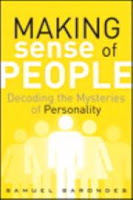
In a new book titled Making Sense of People:  Decoding the Mysteries of Personality, leading neuroscientist Samuel Barondes cites the example of Benjamin Franklin

From his early twenties until he died at 85, Franklin worked to "guard...against the unremitting attraction of ancient habits and the force of perpetual temptations."

Wednesday, June 29, 2011

Art White, 99

Art White changed my life last week.  How?  By replacing my mom as my primary role model for aging.

As loyal readers of this blog know, my mom is now 88.  She still lives alone, still walks every day, still reads voraciously (she just finished Ann Patchett’s newest book State of Wonder), still laughs at the slightest provocation and still has a killer wink that melts me every time I see it.  She sounds amazing, right?

But that’s only part of the picture.  Besides fighting breast cancer and a brain tumor, she’s also increasingly frail and unsure on her feet.  Everywhere we go, I hold her hand to keep her from toppling over.  Oh, and did I mention that she’s almost totally deaf?  I see her practically every day and invariably think to myself, “Is this what I’m going to be like in 30 years?"

So when I interviewed Art White last Monday for my TV show, he gave me needed hope.  Yes, I might end up being as deaf and frail as my mom, but it's also possible that I could remain as active as Art.

Here's a sampling of Art's responses, some given on-air, some in the Green Room before the show.

Wednesday, May 25, 2011

Two Recommendations

1)  Martin Seligman's new book Flourish.

Ever since the Framers of the Constitution claimed that the pursuit of happiness is an inalienable right, Americans have been obsessed with feeling good.  At some universities, the study of happiness has even become an academic discipline. Seligman, the father of positive psychology, was at the helm of this movement.

Now he's done an about-face.  He argues that to flourish, we shouldn't obsess about happiness but instead focus on five separate elements of well-being, each pursued for its own sake: positive emotion, engagement (the feeling of being lost in a task), relationships, meaning and accomplishment.  

Want to learn more?  Click here to read a recent NYT article that describes each element in greater depth.

2)  Brene Brown's TED Talk (below).  In this riveting video, a professor of social work at the University of Houston speaks about the importance of vulnerability in increasing our connectedness to others.  She says that the more vulnerable and less perfect we allow ourselves to be, the better our relationships and sense of well-being.  

Wednesday, May 18, 2011

Happy Birthday to Me!


Today I turn fifty-seven.  A lot of people my age aren’t that keen on getting older, but I’m jazzed about my birthday coming around again.  I'm still breathing!  Other than experiencing some annoying hot flashes and an increasing number of arthritic joints, I’m happier now than I can remember ever having been.  Of course, my mind these days is like a sieve, and the fact that I can’t recall ever having been in a better headspace might just mean that my memory isn't what it used to be.  (Ha!)

Anyway, each year on my birthday I review my calendar to see what I’ve been up to during the past twelve months.  In case you're curious, here’s the raw data from 2010-2011.

Wednesday, May 04, 2011

The Guilt Trap


I guilt easily.  Or at least I used to.  Like many women, I reproached myself for not being the mother, daughter, friend, teacher, writer, and coworker I thought I should be.  I’d beat myself up for exercising too little and snacking too much, for being too organized—yup, I’m serious—and not productive enough.  Oh and I even felt guilty about genocide and world hunger, things over which I obviously have no control.

When I say "like many women," what I really mean is most.  A recent survey by Stylist magazine found that more than 96 percent of us feel guilty at least once a day.  As Erica Jong once famously said: “Show me a woman who doesn’t feel guilty and I’ll show you a man.”

Some of this can be attributed to wiring.  According to researchers, women are generally more empathic than men.  But some of this also comes down to women’s generalized lack of self-worth, reinforced over the millennia by cultural and religious tenets.  We’ve been taught from an early age to be “good” and that being good means putting others first.  When we don’t, we quickly feel bad.

Whatever the cause of my guilt, I realized somewhere along the line that I was wasting a lot of precious energy on it, energy that once freed up, could be used in more fruitful ways.  I also realized that if I didn’t value myself, others wouldn’t either.

So how did I get out of the guilt trap?  Believe me, it’s on ongoing process, but basically…

Wednesday, April 13, 2011

Haunting Words

A single bad review.  That’s all the negative feedback I received when Defying Gravity was first published.  Tons of praise and just one pan.  The reviewer said my writing was “cliché-ridden, saccharine, and uninspired….  Nothing in it cuts to the bone.” 

Ouch!

Among the myriad of glowing reviews, that one scathing judgment validated every insecurity I'd ever had about my writing and made me slightly ashamed of the book itself.  

Believe me, I knew I was crazy to focus on the negative.  I tried to ignore the reviewer's words, but they haunted me.  It didn’t matter that my aim in Defying Gravity wasn’t to publish great prose or win a Pulitzer.  It didn't matter that I'd accomplished my goal, which was to write a quick and easy read that would inspire people to not give up on their dreams as they age.  (I'm being trite again, I know.)  From that point on, I almost always prefaced my comments about the book with the words, “It’s not that well-written, but....”

Then two things happened that changed my thinking.  First, a woman I work with at the Mercy Learning Center mentioned to me this week that she's reading the book and loving it.  I could see in her eyes and hear in her voice that she was being totally sincere.  “I want to give it to all my girlfriends,” she said.  "Every middle-aged woman I know needs to read this book."

Mind you, I’ve heard this comment before.  Actually, I’ve heard it again and again.  But something about how Diane said it made me see that I’ve been getting in the way of the book’s power to transform lives.  

When I told my husband what Diane said and the epiphany I'd had as a result, he sent me a link to the video below.  Some of you might find it, well, saccharine, cliché-ridden, even offensive in terms of its religious slant.  (For being three letters, God is such a huge term, isn’t it?)  But I’d rather have Marianne Williamson's words--often erroneously attributed to Nelson Mandela--stick in my mind than the judgment of some isolated reviewer.  


Monday, February 01, 2010

Drumming at 50

Almost everywhere I look these days, I see articles about people over 50 who are tossing aside their preconceptions about aging and shaking off the weight of their ideas of who they are and what they can still accomplish.  (Talk about defying gravity!)  What started out as a trickle back in 2000 has become a flood.  Right now, sitting on my desk are sixteen stories from the past week that either I've found on my own or others have emailed me.

My favorite is this little snippet I found yesterday in the "The Mail" section of the March/April 2010 issue of AARP magazine.  It's a letter to the editor from a woman named Marla Stahl from Clarksville, Maryland:

"The year I turned 50, I took drum lessons and later became the drummer in a band.  I have been rocking ever since!  Yes, a white-haired lady playing the drums makes folks do a double take, but I am still energetic, happy, productive, and dare I say it, even cute!  [That's my favorite line.] In many ways this is the most fun I've had in my life.  Thanks for confirming that just because we're over 50 doesn't mean we're dead!"

Monday, December 01, 2008

Exercise of the Week: Acting As If

Telling someone to fake a feeling sounds slightly disreputable. But as many a famous author, movie mogul or businesswoman will tell you, sometimes to get ahead you've got to pretend you've got more on the ball than you actually do.

When Defying Gravity was no more than a pipe dream, I walked and talked as if I were already a "real" writer. Before I ever put pen to paper, I called up prospective interviewees and said, "I'm writing a book about late bloomers and was wondering if I could take a few hours of your time to hear your story." I never told anyone I was published. That would have been an outright lie. I simply acted as if I were a serious author. Doing so helped me gain the confidence and skills to actually become one.

The "act as if" principle can be applied to all sorts of aspects of your life. In Philip Galanes' Social Q's column that appeared in yesterday's NY Times, a woman wrote in to say that her boyfriend dumped her and that her heart was broken. She wanted to know how she should act when she sees him again. Galanes, in essence, told her to act as if she's already moved on. Here's an excerpt from his reply:

Every morning, set your iPod to the song “So What!” by the pop singer-slash-philosopher known as Pink: “So, so what/I’m still a rock star/I’ve got my rock moves/And I don’t need you.”

The volume should be deafening; you should listen to it at least three times in a row; and ideally, you will sing along — at full throttle — in front of the full-length mirror in your bedroom.

Not only will you feel better, but you will also learn how to behave in front of your boyfriend: You will act "as if" you’re just fine without him, thank you very much. And you will fake this feeling — as if your life depended on it — until the real thing comes along. (P.S.: If you don’t like Pink, feel free to substitute any proud breakup anthem by Alanis Morissette or Marianne Faithfull. And until further notice, please banish all traces of Joni Mitchell from your household!)

Great advice, eh?

Keeping both these stories in mind, this week's exercise (the last until further notice) is to act as if you're already where you want to be.

Friday, October 24, 2008

Quote of the Day

An individual's self-concept is the core of his personality. It affects every aspect of human behavior: the ability to learn, the capacity to grow and change. A strong, positive self-image is the best possible preparation for success in life.
--Psychologist Dr. Joyce Brothers

Keep in mind that recent research suggests that the brain has a great deal of neuroplasticity. (Click here to read another blog posting I did on this topic.) If we work at it, in other words, it's possible to form new beliefs about ourselves.

Friday, October 10, 2008

Realizing Who You Are Not

Photograph by Stephen Savoia (NY Times)

This week's quote is from NY Times Life's Work columnist Lisa Belkin. In an article titled "Palin Talk", Belkin explores how McCain's choice of VP has "put our own work-family choices on the table." The last line in particular is the one that struck me:
There [is] a hunger and a fury in the conversation about Palin that hints at something deeper. . . . Our talking is part of an endless dance in which we move about in order to figure out where we stand. For what else is gossip but a roundabout way to explore social norms? And what landscape is more complicated to navigate than that of modern parenthood, where we often hold many contradictory opinions at once? Want to work but also want to stay home. Hate pacifiers and use them anyway. . . . In the end, I grudgingly admired [Palin's] fortitude and understood that her way was not mine. You often learn who you are by realizing who you are not.
While I'm on the subject of Sarah Palin and, by extension, the upcoming election, let me recommend a website designed to help voters sort out their gut reactions to the candidates from not only the candidates' records but how they claim they'll govern: GlassBooth.org. (Disclosure: My son Ev is a researcher for the site.)

Thursday, June 28, 2007

Illusion v. Reality

Check out this YouTube video my son Ev forwarded to me. While it has nothing to do with pursuing dreams, it has everything to do with societal attitudes towards aging.

Tuesday, June 05, 2007

Seeing Ourselves With Kind Eyes

A few years ago a friend confided to me that he didn't think he was particularly successful. This man is a partner at a large law firm and on the board of several civic and professional organizations. He's constantly sharing his expertise with colleagues and lending others a hand.

I don't know what benchmarks this gentleman is measuring himself against, but if he's not successful, who is?

Countless women I've met rank even lower on the self-esteem scale.

I can't help but think that if we could see ourselves the way our dearest loved ones see us, we might not only be gentler in our self-judgment, but kinder to others.

Friday, May 18, 2007

Birthday Musings

A woman came up to me this morning and said, "Don't you think it's time for a new headshot?" She seemed to think I look older in person than I do in my publicity photos.

I've been thinking the same thing.

The pictures I use were taken in the fall of 2003, and I probably should get some new ones. (The photo at right was taken today.) Still, to hear it from someone else on my 53rd birthday was deflating, to say the least.

But then in a flash of defiant delight, I thought to myself: I like how I look, and despite the sting, I like hearing the truth.

I'm not sure I could have said that twenty years ago.

Friday, May 04, 2007

Shape Shifting


My son Everett was in California last week and e-mailed me the following LA Times article by columnist Meghan Daum. (I love Daum's wry sense of humor!) To read the full text, click here.

TRY THIS WRINKLE: GROW UP
Botox rolls back the clock, but do you want to go there?

April 21, 2007

. . . . My big problem with Botox and other anti-aging procedures is not that they're shallow, or that their corollary is that too many of the moms on TV are played by actresses already so young you'd think every kid on a sitcom was the result of a teen pregnancy. It's that all of it has succeeded in extending the self-consciousness of youth into middle age, effectively undermining our ability to come to terms with our looks and concentrate on more pressing matters (for instance, foreign policy or, barring that, our lower backs). Because we're so versed in what a drag it is getting old, we seem to have developed a collective amnesia about the chaos, humiliations and downright stupidity that comes with being young.

Sure, our faces might look great when we're 25, but what about the entry-level jobs, the revolving roommates, the relationships founded entirely upon takeout Indian food and mediocre sex? (These are all hypotheticals, honest.) Though you wouldn't know it from watching "Friends," being in your 20s isn't all it's cracked up to be. As nice as it is to have your whole life ahead of you, it's somewhat less nice to be broke, condescended to and confused about everything from career choices to personal stye. . . .

I realize that the idea behind getting Botox is to preserve our original selves, but anyone who's honest about the whole enterprise knows that the altered face is less "preserved" than it is brand new.

And that's why there's something so drearily adolescent about the whole thing. Just when many of us are finally starting to know ourselves as adults, we're expected to start shape shifting again. Like the teenager who walks into a vintage clothing store and suddenly decides to trade all her Gap clothes for Betty Boop dresses (again, a hypothetical), we get pushed by the easy availability of this youth-preserving technology to second-guess ourselves and spend time and money deciding what we should look like.

At 16, that's healthy (if cringe-inducing later on.) At 40, it's a sacrifice of our God-given right to let nature take its course so we can get on to more interesting things. . . .

Amen to that!


Note: The picture at right shows me with my 84 year old mother. My mom colors her hair and wears lipstick, but she's never had Botox or plastic surgery. She looks her age (as do many of the men and women I've interviewed), but that doesn't mean she isn't beautiful.


The public-domain photograph at the top of this posting is of a 19th century painting by Viktor Vasnetsov titled "Tsarevna Frog" (a frog metamorphoses into a princess).

Tuesday, October 17, 2006

A Good Look in the Mirror


When did aging become such a sin?

Everywhere we look—magazines, movies, TV, billboards—we see airbrushed images of gorgeous, wrinkle-free women who appear to be in their twenties, even when they’re considerably older. These women are held up as our cultural ideal, as if adhering to this rigid and unattainable (at least for ninety-five percent of the population) standard of beauty ensures that we’ll feel fulfilled.

But as social anthropologist Kate Fox argues in her article Mirror Mirror, we don’t just equate this distorted vision of beauty with fulfillment. We equate it with goodness, holding onto “an irrational but deep-seated belief that physically attractive people possess other desirable characteristics such as intelligence, competence, social skills, confidence—even moral virtue.”

No wonder women on average spend two years of their lives looking in the mirror—or so I recently read on YAHOO NEWS. And my guess is that most of the time, we boomers aren’t glancing at ourselves and saying, “Hi gorgeous!” We’re scrutinizing every square inch of our bodies, watching out for each new wrinkle and sag.

I’m tempted to say, “What a waste of energy!” But that would be disingenuous of me. I, too, spend a fair amount of time looking at myself in the mirror, worrying how much longer I’ve got before my 52-year old body starts looking, well, old.

Like many of us, I intuitively understand that I live in a culture which has a proven “beauty bias" (Fox's term)--a society where teachers give attractive students higher marks; employers prefer attractive job applicants; and, in court, judges and juries find attractive people guilty less often.

In other words, it’s no wonder we pay attention to our appearance. The problem is, we don’t just pay attention. We obsess. And the most self-destructive aspect of our obsession is thinking that to be beautiful we have to look young. It’s not just ourselves we’re hurting. When we become complicit in the culture of youth, we’re also doing our daughters a disservice.

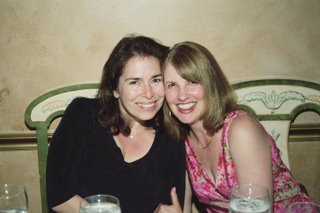
My friend Tamara argues that the best thing we could do for them—and for us—would be to start an “older women are sexy” movement. (That's Tamara and me at my 50th birthday party in the picture at the top of this entry.) She envisions a well-thought-out, expensive media campaign designed to change society's perception of older women.

I think she’s onto something.

But if we boomer women want to be seen by our daughters—and the world at large—as vital, interesting, hot mamas, we need to understand that being “hot” starts inside our heads and that being beautiful is something we already are.

Here's what I propose: Let's take care of our skin, but be at peace with our wrinkles. (Do you know any eighty year olds without them?) Let's maintain a healthy weight, but enjoy our womanly curves. Let’s send our daughters the message that we love being who we are—whatever our age. Let’s give them something to look forward to.

So go ahead and take that look in the mirror, but view yourself through kinder eyes. Celebrate each and every triumph, large and small. Then ask yourself, “What do my friends and family love about me?”—and see yourself through those eyes.

Then, after taking stock of what you’ve accomplished and who you are, ask yourself if there’s anything more you’d like to give, anything else you’d like to do. Because there’s nothing quite as irresistible as a woman who’s doing something that gives her life purpose.

Once you get beyond the first few glances, passion trumps physical beauty every time.


NOTE: Here's an excerpt from the first comment posted (see link below), which I was surprised and thrilled to see was from my 23-year old son Ev.
We emphasize the beauty of growing old at the risk of sounding cliché, but the discussion is so vital to keep at the forefront of our collective consciousness. All of us (who don't die young) get old, wrinkly, and "ugly"--we expect nothing less--and yet continue to cling to an aesthetic ideal founded upon characteristics which most of us never have and all of us lose eventually. We set ourselves up for unhappiness in this way – and even those whom we idolize are often unhappy and tortured, even while in the prime of what we call beauty. There’s no easy way to free ourselves from this prison, but the first step to freedom is always in recognizing the truth and discussing it....


Photo credit: Suzanne Sheridan